Feathers, Fur, and Two Wheels: A Cyclist's Field Guide to Riverside Wildlife
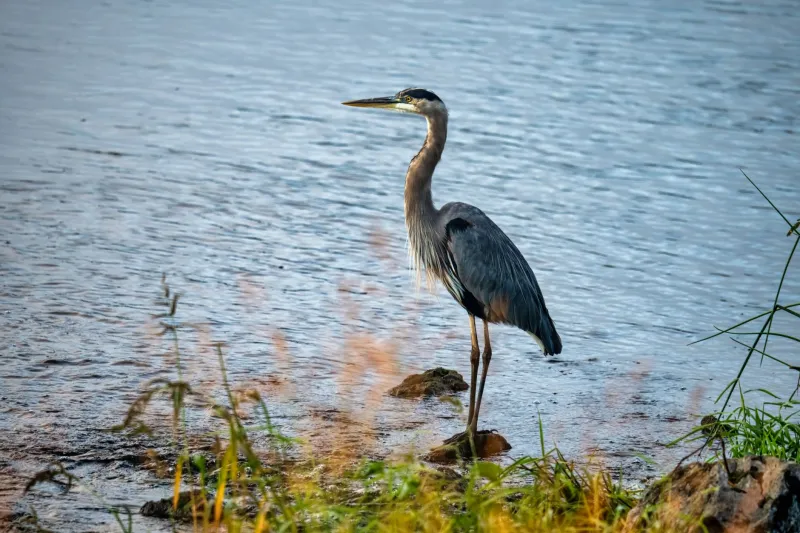
There's a particular kind of magic that happens when you round a bend on a riverside trail and find a great blue heron standing absolutely motionless in the shallows, backlit by early morning sun. Your brakes barely whisper. The bird doesn't flinch. For a few seconds, it's just you and this prehistoric-looking creature doing its thing like you don't exist.
That moment — unhurried, unplanned, completely free — is one of the best arguments for riding near water that nobody ever puts on a trail map.
American river corridors are genuinely wild places, even when they run through the middle of a city. The riparian zone (the habitat that hugs the banks) is one of the most biologically productive ecosystems on the continent. Water means food. Food means animals. And a quiet cyclist on a smooth trail is, more often than not, invisible enough to witness all of it.
Here's your guide to what you'll actually encounter out there, when to expect it, and how to keep the experience good for both you and the wildlife.
What's Actually Sharing the Trail With You
Birds are the most reliable wildlife you'll encounter, and river corridors are essentially a flyway for dozens of species. Great blue herons are the undisputed celebrities — tall, slow-moving, and absurdly photogenic. You'll find them wading in shallow riffles or standing sentinel on exposed logs. Belted kingfishers are smaller and louder, buzzing up and down the water's edge with a rattling call that sounds like a tiny alarm clock. Keep your eyes on overhanging branches.
Osprey are another highlight. If you ride near larger rivers — the Ohio, the Missouri, the Sacramento, the Delaware — you've got a real shot at watching one hover and dive. It's legitimately one of the most dramatic things in nature, and it happens for free along trails that most people drive past every day.
Ducks, geese, cormorants, and mergansers round out the water bird lineup depending on your region. In the Southeast, you might spot anhingas drying their wings on a low branch like some kind of ancient symbol. In the Pacific Northwest, common mergansers will pace you downstream if you're riding at the right speed.
Mammals take a little more patience but show up more often than you'd think. White-tailed deer are everywhere east of the Rockies, and mule deer fill that role out west. Dawn and dusk rides are your best bet — deer are crepuscular, meaning they're most active in those low-light windows. Beavers are another river-specific treat. Look for gnawed stumps and dam structures; if you're riding near a pond or slow-moving backwater at dusk, you may catch one swimming with a branch in its mouth.
Raccoons, river otters, muskrats, and the occasional red fox round out the cast. In wilder corridors — the Snake River Greenbelt in Idaho, the Chattahoochee River Trail in Georgia, stretches of the Rio Grande — black bear sightings are not unheard of.
Reptiles get overlooked but deserve attention. Painted turtles and red-eared sliders love to bask on logs and rocks in the morning. Snapping turtles occasionally cross trails. Water snakes — non-venomous but easy to misidentify — are common along the bank. Give them space and keep moving.
How Seasons Change What You See
The river isn't the same place twice, and wildlife activity shifts dramatically through the year.
Spring is arguably the richest season. Migratory birds are moving through in waves, breeding activity is ramping up, and animals that spent winter underground or dormant are suddenly visible again. Waterfowl nesting near the trail means you'll want to give a wide berth to any bird that seems agitated or unusually stationary.
Summer brings a different rhythm. Heat pushes many mammals into shade during midday, so early morning rides yield the most action. Fawns appear in June and July — adorable, but a reminder to watch for does who may be protective and unpredictable near the trail.
Fall is migration season again, and river corridors funnel birds south in impressive numbers. Raptors — hawks, falcons, eagles — are especially visible. Bald eagles, which have made a genuine comeback across the U.S., are increasingly common along major river systems from October through March.
Winter strips away the foliage and makes everything easier to spot. Deer, foxes, and birds of prey stand out against bare trees and pale light. River otters stay active year-round and are actually easier to find in winter when the banks are quiet.
How Not to Blow the Moment (Or Stress Out the Animal)
The single most important thing you can do is slow down before you've already spooked something. Animals detect fast-moving objects as threats. A cyclist at 18 mph triggers a flight response. A cyclist at 6 mph, coasting quietly, often doesn't register as a predator at all.
A few practical habits:
- Brake early and easy. Sudden braking creates noise and jerky movement. If you spot something ahead, start reducing speed well before you reach it.
- Stay on the trail. Stepping off the path to get closer almost always ends with the animal bolting. The trail itself gives you a defined, non-threatening presence.
- Keep voices low. If you're riding with friends, a quick hand signal to slow down beats a shouted heads-up every time.
- Don't feed anything. It's bad for the animal, potentially dangerous for you, and illegal in many parks.
- Give nesting birds serious room. A bird that won't fly away from you isn't comfortable — it's protecting eggs or chicks and is under stress. Back off.
Getting the Shot Without Being That Person
Phone cameras have gotten good enough that you can capture genuinely great wildlife images from the saddle without hauling a telephoto lens. A few tips that make a real difference:
Stop pedaling before you reach the animal and coast to a halt. The vibration from pedaling transmits through the frame and, oddly, seems to register. Let the animal settle for a moment before you reach for your phone.
Shoot from the trail. Don't wade into the grass or approach the bank. The best wildlife photos from a bike are taken at a respectful distance — and honestly, the context (trail, water, natural light) makes them more interesting anyway.
Turn off your flash, always. It's useless at distance and will absolutely send the animal running.
If you're serious about wildlife photography from a bike, look into a handlebar mount for a compact mirrorless camera. It sounds awkward but works surprisingly well for birding rides where you want your hands free.
The Bigger Picture
Riverside cycling puts you in a living ecosystem in a way that a car window or even a hiking trail simply doesn't replicate. The speed is right. The noise is low. The route follows the water, which is where the animals are.
Every time you roll out on a river trail, you're not just getting a workout or a commute — you're moving through a corridor that supports hundreds of species, many of them quietly going about their lives a few feet from your handlebars.
Pay attention. Slow down when it matters. Leave the place as undisturbed as you found it.
The heron will still be there next time. And the time after that.