Ditch the Dashboard: How Riverside Bike Paths Are Rewriting the American Commute
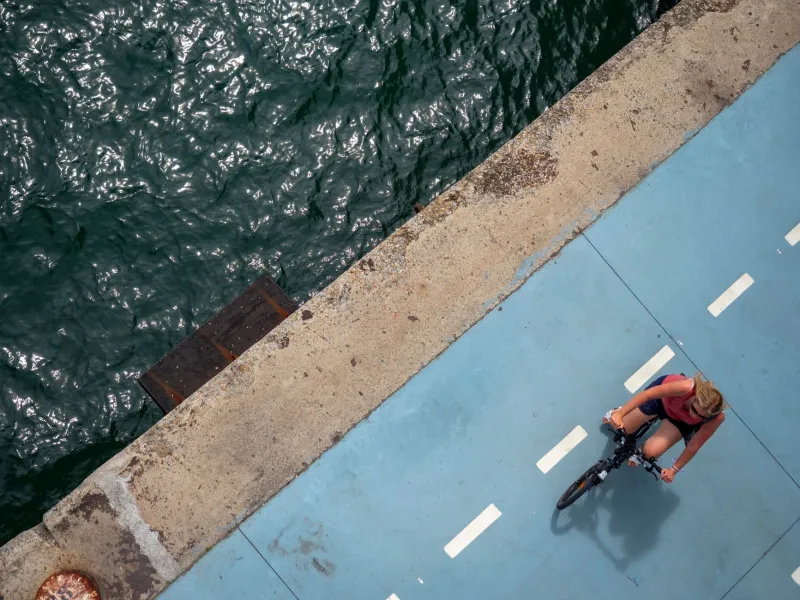
Marcus Webb used to spend 45 minutes every morning crawling down I-76 into Philadelphia. Coffee in the cupholder, podcast in the speakers, knuckles occasionally white. Now he rolls out of his Manayunk rowhouse, drops onto the Schuylkill River Trail, and arrives at his Center City office in about the same time — except he shows up alert, legs warm, and genuinely in a good mood.
"I didn't expect to actually like the commute," he admits. "I thought I was just being practical. But now it's the best part of my day."
Marcus isn't an anomaly. He's part of a quiet revolution happening along riverbanks from Sacramento to Cincinnati — one where bike-friendly water corridors are doing something city planners have struggled to accomplish for decades: convincing everyday Americans to leave the car at home.
Why Water Changes Everything
There's a reason trail usage spikes when a route runs alongside a river. It's not just the scenery, though that certainly doesn't hurt. Water-adjacent paths tend to be flatter, which lowers the barrier for riders who aren't hardcore cyclists. They're often separated from traffic, which addresses the safety concerns that keep would-be bike commuters on the fence. And psychologically, moving through a natural corridor just feels different than grinding through city streets.
Researchers at the University of Exeter have documented what cyclists already know intuitively: people who commute through green and blue spaces — parks, rivers, waterfronts — report significantly lower stress levels compared to those navigating urban traffic. When you're spinning alongside the Willamette or the Chattahoochee, your nervous system gets a different experience than when you're fighting for lane space on a four-lane arterial.
Urban planners have started paying attention to this data. And increasingly, they're designing around it.
The Infrastructure Push
Cities that have invested in riverside cycling infrastructure are seeing measurable returns. The Louisville Loop, which traces the Ohio River through downtown and into surrounding neighborhoods, logs hundreds of thousands of trips annually — and local transportation surveys suggest a meaningful percentage of those are car-replacement commutes, not just weekend recreation.
In Sacramento, the American River Parkway — stretching roughly 32 miles from Folsom to the confluence with the Sacramento River — functions as a genuine commuter artery for thousands of riders. The city has worked to close gaps and improve lighting along key segments specifically because commuters, not just recreational users, were demanding it.
Portland's riverfront network is perhaps the most cited example in urban planning circles. The Eastbank Esplanade and its connections to the broader regional trail system have contributed to Portland consistently ranking among the top US cities for bike commuting. The city's investment in water-adjacent infrastructure didn't just attract cyclists — it helped normalize cycling as a legitimate transportation mode.
"When the route is beautiful and protected, you stop needing to convince people," says Dana Hirsch, a transportation planner who has worked on riverfront trail projects in three different metro areas. "The path sells itself. Our job is just to connect the dots and remove the friction."
Removing friction, in practice, means things like protected crossings at major intersections, consistent wayfinding signage, secure bike parking at the trail's urban endpoints, and lighting that makes year-round commuting realistic. It also means building political will — which, Hirsch notes, gets easier once ridership numbers start coming in.
The Numbers Behind the Shift
The League of American Bicyclists and various regional transportation agencies have been tracking bike commute trends for years, and the data tells an encouraging story — particularly in cities that have made targeted infrastructure investments along waterways.
In Pittsburgh, where the Three Rivers Heritage Trail system has expanded significantly over the past decade, bike commute rates in adjacent neighborhoods have climbed well above the national average. A 2022 regional transportation study found that residents living within a half-mile of the trail were more than twice as likely to commute by bike compared to residents in similar neighborhoods without trail access.
The environmental math adds up quickly. Every car trip replaced by a bike commute removes roughly one pound of CO2 per mile from the equation. Multiply that across thousands of daily riders on a single corridor, and you're looking at meaningful emissions reductions — without mandates, without policy fights, just infrastructure that makes the better choice the easier one.
The economic picture is similarly compelling. Bike commuters tend to spend more at local businesses along their routes than car commuters do. They stop. They linger. Trail-adjacent businesses in cities like Denver and Minneapolis have documented measurable revenue increases tied directly to trail traffic — coffee shops, bike shops, lunch spots, and convenience stores all benefit from the foot traffic that a well-used riverside path generates.
Real People, Real Routes
Jamila Torres has been bike commuting along the Chicago Riverwalk and connecting paths for three years. She traded a monthly CTA pass for a quality commuter bike and hasn't looked back. "I'm saving money, I'm not late anymore because of train delays, and I genuinely feel better," she says. "My doctor noticed. My boss noticed. I noticed."
For Torres, the riverside element is key. "The lakefront path and the river routes — that's where you feel like you're actually moving through the city, not just surviving it. It doesn't feel like a chore."
That sentiment — commuting as something you look forward to rather than endure — comes up repeatedly when you talk to people who've made the switch. It speaks to something deeper than transportation efficiency. It's about reclaiming a part of the day that most people write off as lost time.
What Needs to Happen Next
For all the progress, gaps remain. Many riverside trail networks still suffer from connectivity issues — a beautiful five-mile stretch that dead-ends before reaching a major employment center isn't a commuter route, it's a recreational amenity. Advocates and planners alike emphasize that last-mile connections are where the real work is.
Funding is the perennial challenge. Federal infrastructure dollars have flowed into active transportation projects in recent years, but competition is fierce and local political priorities vary. Cities that have made riverside commuting viable tend to be ones with sustained advocacy communities pushing consistently for investment.
Safety remains a real concern for potential commuters, particularly those new to urban cycling. Separated infrastructure helps enormously, but education, enforcement, and community support all play roles in making riders feel confident enough to commit to the commute.
The Path Is There — Are You Ready to Take It?
The riverside commute isn't a fantasy reserved for cities with perfect infrastructure or ideal weather. It's happening in cold-weather markets like Minneapolis, in sprawling Sun Belt metros like Phoenix, in post-industrial cities rebuilding their relationships with neglected waterways. Wherever there's a river and a bike path, somebody is figuring out how to turn that corridor into a commute.
Marcus Webb, back on the Schuylkill Trail, says he occasionally passes his old exit ramp on the highway when he's driving somewhere on the weekend. "I look at those cars backed up and I just think — I used to do that every single day," he says. "I don't miss it for a second."
Neither do the rivers.