Blue Mind on Two Wheels: What Riding Next to Water Actually Does to Your Brain
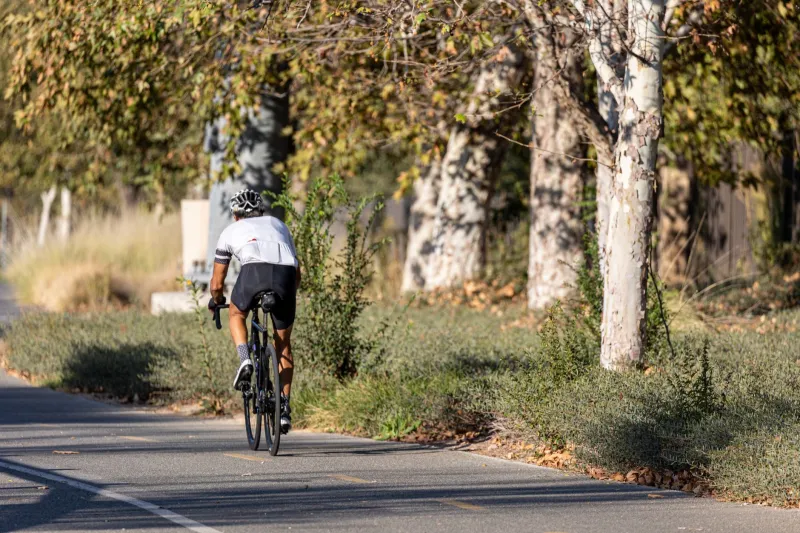
You've probably felt it before. You roll onto a riverside path, the current catches your eye for just a second, and something in your shoulders drops. Your cadence smooths out. The white noise in your head gets quieter. You stop counting miles and start actually riding.
That's not coincidence. And it's not just a nice day.
There's a growing body of research — and a whole lot of anecdotal evidence from cyclists who swear by their waterfront routes — suggesting that riding near rivers does something measurable to your mental state and, by extension, your performance on the bike. We dug into the science, talked to a few coaches and riders, and came away genuinely convinced: if you've been sleeping on riverside riding, you're leaving something real on the table.
The "Blue Mind" Effect — What It Is and Why Cyclists Should Care
Marine biologist Wallace J. Nichols popularized the term "blue mind" to describe the mild meditative state humans tend to slip into when they're near, in, or on water. His research, and the wider neuroscience it draws from, points to reduced cortisol levels, lower heart rate variability stress markers, and increased activity in the brain's default mode network — the part associated with creativity, calm, and what athletes often call "flow."
For cyclists, flow state is the holy grail. It's that stretch of a ride where effort feels effortless, where your body and the bike stop feeling like separate things. Most riders chase it and rarely catch it on demand. But riverside terrain, it turns out, might be a shortcut.
"Water provides this consistent, low-level sensory input that occupies just enough of your attention to quiet the mental chatter without actually distracting you from what you're doing," explains Dr. Renata Sousa, a sports psychologist based in Sacramento who works with endurance athletes. "For cyclists especially, that's a sweet spot. You're not bored, but you're also not cognitively overloaded. That's when the body can really perform."
Why Riverside Terrain Keeps You Honest
Beyond the psychological lift, there's something about the physical environment near water that demands a particular kind of attention from riders.
Riverside trails tend to have their own personality. Grade changes near riverbanks are often subtle but constant — you're rarely grinding up a sustained climb, but you're also rarely truly coasting. Root systems from cottonwoods and willows push up through packed dirt. Sandy sections appear after high water. The trail surface shifts under you in ways that keep your hands loose and your eyes scanning ahead.
"I tell my athletes that riverside trails are basically a skills clinic disguised as a leisure ride," says Marcus Webb, a cycling coach out of Portland, Oregon who trains both competitive road riders and recreational mountain bikers. "You're making micro-adjustments constantly — weight distribution, line choice, brake pressure. It sharpens you up without feeling like work because the scenery keeps your mood positive."
That combination — technical engagement plus emotional ease — may be exactly why so many riders report their best perceived effort numbers on waterfront routes. You're working, but it doesn't register as suffering.
The Focus Paradox: Water Distracts You Into Better Concentration
Here's where it gets interesting, and a little counterintuitive. Water is visually dynamic. A moving river is never the same twice. Glare shifts with the sun. Birds drop in. The current braids and eddies. By all logic, that should be distracting.
But attention researchers distinguish between directed attention — the effortful kind you use to focus on a screen or a spreadsheet — and involuntary attention, which is the easy, restorative kind triggered by naturally interesting stimuli. Water falls hard into that second category.
When your involuntary attention is gently engaged by the river beside you, your directed attention actually gets a rest. You're not forcing focus; it's just happening. And when you need to snap back to a technical section of trail, that directed attention is fresher, less depleted.
"It's the same reason a walk in a park recovers your concentration better than a walk down a busy street," Dr. Sousa notes. "Natural water environments are particularly potent for that kind of restoration. For athletes, it means you can sustain quality focus for longer before mental fatigue sets in."
Practical Ways to Actually Get These Benefits
Knowing the science is one thing. Using it is another. A few things that can help you get more out of your next riverside ride:
Start with an easy spin-in. Don't hammer from the trailhead. Give yourself the first ten minutes to actually take in the environment — glance at the water, notice the sound, let your nervous system settle. You're priming the pump for flow, not wasting warm-up time.
Leave the headphones at home, at least occasionally. The ambient soundscape near a river — current, wind through riparian brush, the occasional heron — is doing real work for your mental state. Drowning it out with a playlist short-circuits some of the benefit. Try a few rides with just the trail sounds and notice whether your perceived exertion shifts.
Use the water as a reset cue. If you hit a rough patch — legs going sour, frustration creeping in — find a spot where you can actually see the river and soften your gaze on it for a few seconds. It sounds almost too simple, but it's a legitimate attention reset that many coaches now build into training protocols.
Pick your time of day. Early morning light on moving water is genuinely different from midday glare. Many riders find that dawn riverside rides produce the strongest flow states, possibly because lower ambient noise and cooler temperatures compound the water's calming effect.
Vary your pace intentionally. Let the terrain guide your effort rather than your GPS. Riverside trails reward riders who respond to what's actually in front of them rather than chasing a target number. That kind of responsive riding is itself a form of mindfulness practice.
What Regular Riverside Riders Already Know
Talk to anyone who rides the American River Parkway in Sacramento, the Minuteman Bikeway along the Assabet in Massachusetts, or the Willamette Greenway trails in Oregon, and you'll hear variations on the same theme: these routes feel different. Not just prettier — different in a way that's hard to articulate but easy to recognize.
"I've ridden in the mountains, I've done rail trails through farmland, I've ridden beach paths," says Dani Okafor, a recreational rider and trail volunteer in Richmond, Virginia who logs most of her miles along the James River. "Nothing resets me the way the river does. I come off a riverside ride feeling like I actually went somewhere, even if I just did an hour loop."
That sense of having genuinely traveled — mentally as much as physically — might be the most underrated thing riverside riding offers. In a culture that's constantly gamifying fitness and chasing metrics, the river has a way of reminding you why you got on a bike in the first place.
And it turns out, that reminder makes you faster. Go figure.