Four Seasons, One River: How to Read the Trail Year-Round
If you've ever shown up to your favorite riverside trail only to find it buried under two feet of muddy water — or cracked and rutted like a forgotten parking lot — you already know the deal. Trails near rivers don't behave like their inland counterparts. They're living systems, shaped by snowmelt, rainfall, drought cycles, and everything in between. Learning to read those rhythms isn't just good planning. It's part of what makes you a real riverside rider.
This guide breaks down what to expect season by season, with a look at how conditions vary across different parts of the country. Whether you're spinning along the Willamette in Oregon, the Colorado River corridor in Utah, or the Mississippi bluffs in the Midwest, the same core principles apply — even if the timing shifts.
Spring: The Season That Humbles Everyone
Spring is the most unpredictable stretch of the riding calendar, and riverside trails feel it harder than most. Snowmelt from upstream combines with seasonal rain to push water levels well above their normal range. Trails that were perfectly rideable in February can be completely submerged by April.
In the Pacific Northwest, this window can last from late February through May. In the Upper Midwest, spring flooding often peaks in March and April. Down in the Southeast, rivers like the Chattahoochee and the French Broad tend to surge earlier — sometimes as soon as late winter — but also recede faster thanks to warmer temps.
What to watch for:
- Standing water on low-lying sections, especially near river bends where sediment collects
- Soft, saturated soil that compresses under tire pressure and causes lasting ruts
- Debris — logs, branches, and rockfall — deposited mid-trail by floodwaters
- Undercut banks that look solid but aren't
The golden rule here is simple: if the trail is wet enough to leave a tire track, it's wet enough to cause damage. Riding on saturated singletrack tears up the surface and creates erosion problems that take months to fix. Give your trails time to drain. Most land managers post closures, but even when they don't, use your judgment.
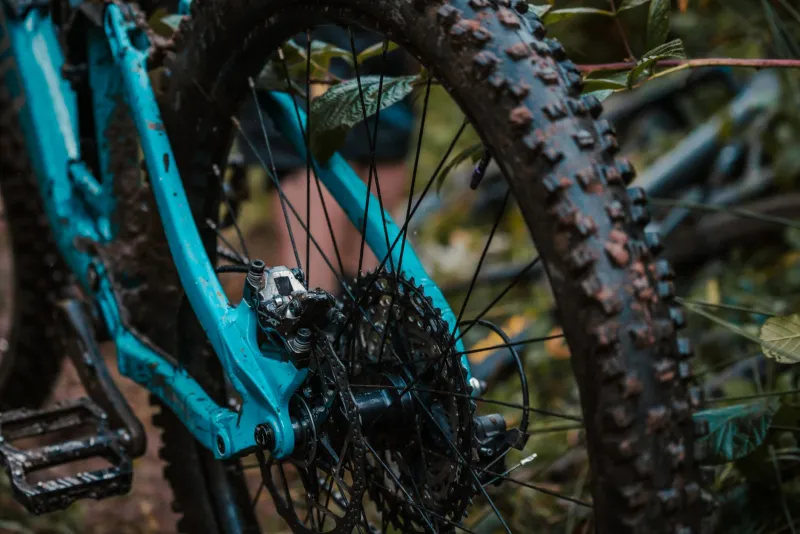
Gear-wise, spring is the time to run wider tires with more aggressive tread, keep fenders on your setup, and accept that you're going to get dirty. A dropper post helps navigate sketchy, debris-covered sections with more control.
Summer: Prime Time With a Catch
For most of the country, summer brings the best riding conditions of the year. Trails are dry, hardpack surfaces are fast, and long daylight hours mean you can squeeze in a ride before work or after dinner without needing a headlamp.
But summer along a riverside trail has its own set of quirks. In the Southwest — think the Rio Grande corridor, the lower Colorado, or trails around Moab — summer heat isn't just uncomfortable, it's a safety issue. Midday temperatures can push above 105°F in July and August, and trail surfaces absorb and radiate heat in ways that drain you fast.
In contrast, the northern Rockies and upper Great Plains tend to hit their stride in July, with dry, tacky conditions that make for some of the most satisfying trail riding in the country.
What to watch for:
- Flash flooding, especially in canyon terrain — a storm 20 miles upstream can send a wall of water down a drainage with almost no warning
- Dust on hardpack surfaces that creates a slippery top layer — almost like riding on marbles
- Dry creek crossings that turn dangerous in minutes during afternoon thunderstorms
- Wildlife activity, particularly near water sources that attract deer, snakes, and in some regions, bears
Hydration strategy matters more on summer riverside rides than almost anywhere else. Pack more water than you think you need. The proximity to a river doesn't mean you have easy access to clean drinking water.
Fall: The Sweet Spot Most Riders Miss
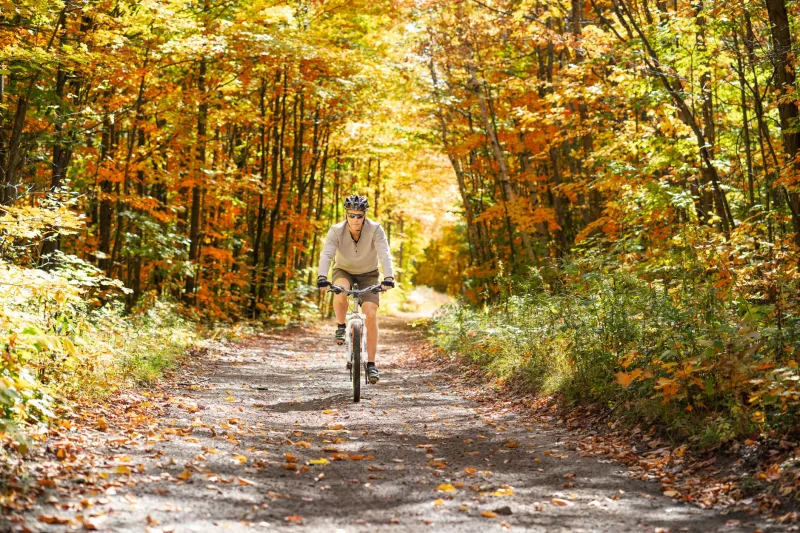
Fall doesn't get nearly enough credit. Across most of the US, late September through November offers a riding window that's genuinely hard to beat. Temperatures drop into a comfortable range, rainfall hasn't yet saturated the ground, and trail surfaces that baked all summer start to soften just enough to grip without getting muddy.
Riverside trails in the Appalachians and the Ozarks are particularly stunning in fall. Leaf canopy creates a kind of tunnel effect over the trail, and the light through the trees in the late afternoon is the kind of thing that makes you remember why you started riding in the first place.
That said, fall comes with its own hazards that catch riders off guard.
What to watch for:
- Wet leaves on trail surfaces — they're essentially invisible ice, especially on wooden bridges and exposed roots
- Shorter days that sneak up on you mid-ride
- Early-season rain events in October and November that can trigger quick, localized flooding
- Hunting season in many riverside areas — know your local regulations and consider wearing orange on multi-use trails
Fall is also a great time to start dialing in your layering system. Mornings and evenings drop fast near water, and a riverside trail that's 72°F at noon can feel closer to 50°F by 6 PM.
Winter: Not a Write-Off — Just a Different Game
A lot of riders hang it up when the temperature drops, and that's a shame, because winter riverside riding can be genuinely rewarding if you approach it right.
In the South — along trail systems near the Guadalupe in Texas, the Cahaba in Alabama, or the Edisto in South Carolina — winter barely registers. Trails stay open and rideable through December and February with minimal interruption. Farther north, the story changes, but it doesn't have to mean months on a trainer.
Frozen ground is actually ideal trail surface. When soil temps drop below 32°F, the ground firms up in ways that make certain trails faster and more forgiving than they are in any other season. Fat bikes have opened up a whole category of winter riverside riding, particularly in the Upper Midwest and New England, where trails that would be closed all spring due to thaw conditions are perfectly rideable under a layer of snow.
What to watch for:
- Freeze-thaw cycles that create deceptively unstable surfaces — frozen on top, soft underneath
- Ice on shaded sections near the water, where moisture lingers and temps stay low
- Shortened windows of safe riding light
- River ice that forms along the banks but isn't structurally sound
Layering is non-negotiable in winter. Wind chill near open water is brutal, and stopping — whether to fix a mechanical or just catch your breath — means your core temperature drops fast. Merino base layers, a wind shell, and insulated gloves are the minimum viable kit.
The Bigger Picture: Know Your River, Know Your Trail
No guide can replace local knowledge. Every river system has its own personality — its own flood cycles, its own drainage patterns, its own quirks. Connecting with your local trail association, following your regional land manager's social media accounts, and talking to other riders who know the system are all part of building the kind of situational awareness that keeps you riding safely and sustainably all year.
The riders who get the most out of riverside trails aren't necessarily the strongest or the fastest. They're the ones who pay attention — who notice when the river's running high, who check conditions before they roll out, and who understand that the trail they love is worth protecting by knowing when to stay home.
Ride the river. Own the trail. But read them both first.